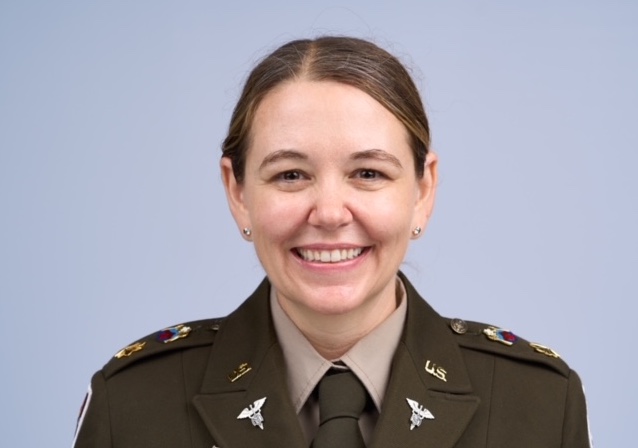
Editor’s note: Adler University is educating changemakers. In this new series, Alum Journeys, we’ll meet many of our former students who are now impacting how communities thrive.

A prestigious and intensive training initiative, the U.S. Army’s Clinical Psychology Internship Programme (CPIP) is offered at only four premier military medical facilities across the United States.
Earlier this year, Adler University alum Maj. Amy Thrasher, Psy.D., was selected to lead the training and education of future Army psychologists at one of these elite locations. She credits her time at Adler’s Doctor of Psychology in Clinical Psychology Programme, with an emphasis in Military Clinical Psychology – and the University’s faculty – for preparing her for this remarkable opportunity.
“The training I received at Adler laid the foundation for my success as an Army psychologist,” Dr. Thrasher shared.
According to the Military Health System, the primary aim of the 12-month CPIP “is to produce highly qualified, resourceful, and autonomous psychologists.” Each year, six interns are approved to work at each of four military medical facilities, including Tripler Army Medical Centre in Honolulu, Hawaii. It’s here that Dr. Thrasher now serves as Programme director after completing a post-doctoral fellowship in health psychology earlier this year.
“This was a goal of mine,” Dr. Thrasher said. “During my last year at Adler, I did my internship at Walter Reed Medical Centre, and my training director there knew I was interested in following that career path. But there are so few of these Programme director positions.”
This Honour is just one of many for Dr. Thrasher. In July, she was named one of two recipients of the Arthur W. Melton Achievement Award by the American Psychological Association’s Society for Military Psychology (Division 19) for her early career achievements.
Since graduating from Adler in 2016, Dr. Thrasher has held several key positions, including as chief of inpatient psychology and deputy chief of the Embedded Behavioural Health Clinic at Womack Army Medical Centre. She has also served as the Behavioural health officer in charge in the western region in Iraq, and as the brigade embedded Behavioural officer for the 18th Military Police Brigade in Germany before transferring to Hawaii in 2022.
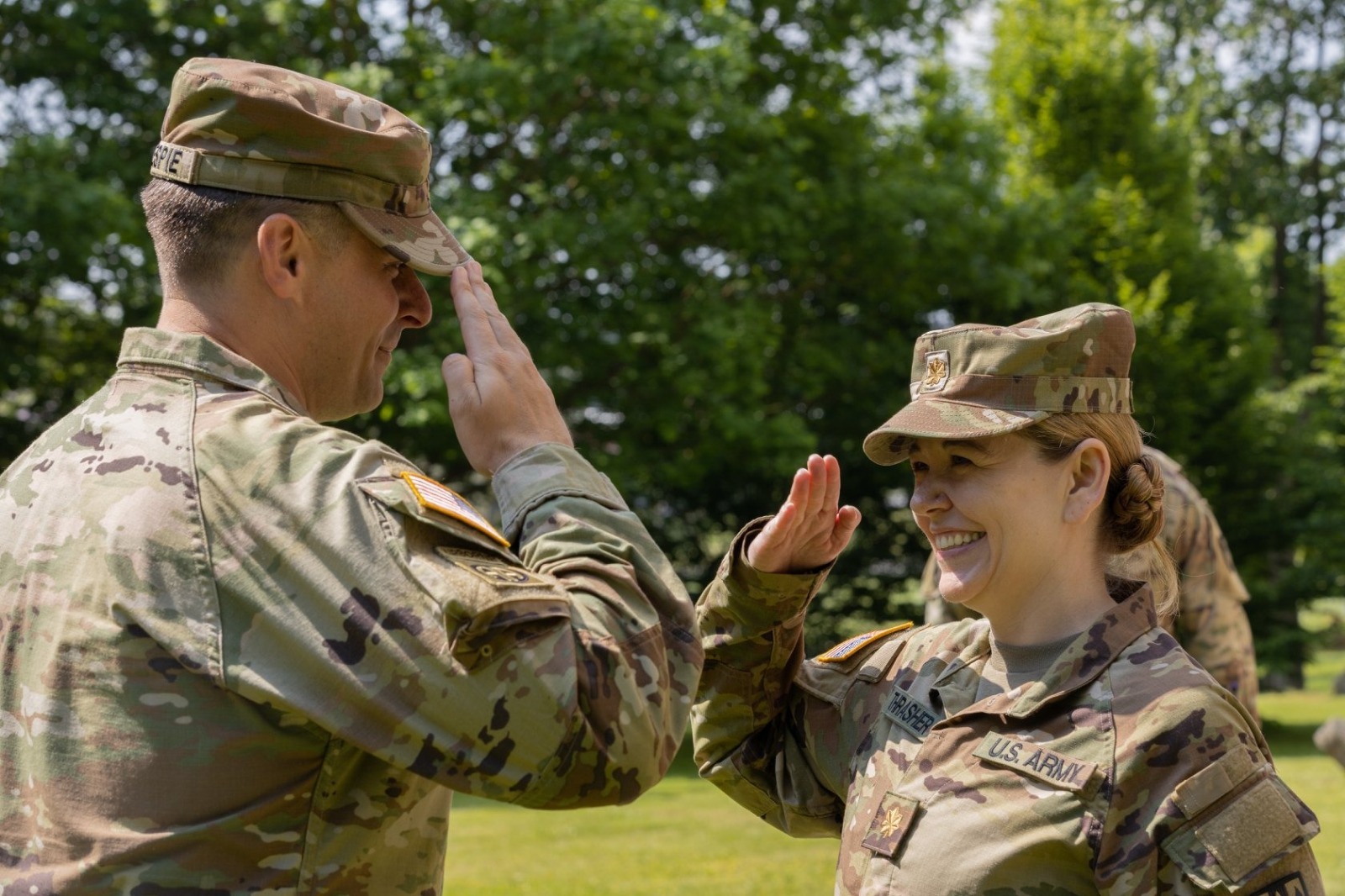
Reflecting on her time at Adler, Dr. Thrasher highlighted the impact of two professors in particular.
“I took many courses with Dr. Joseph Troiani in the military psychology Programme, and that provided the foundation to be successful as an Army psychologist,” she said. “I‘ve been very grateful for that.”
She also praised Dr. Peter Ji, who served as her statistics professor and dissertation committee member, saying, “To this day, I do not believe I would have completed my dissertation without his support. He talked me off the ledge every time I hit a roadblock.”
Looking ahead, Dr. Thrasher’s first edited book, “Embedded Behavioural Health in the Military: A guide for all Behavioural health officers and leaders,” is set to be published in October 2025.
Today, as CPIP Programme director, Dr. Thrasher’s primary role is to guide and mentor the interns who work directly with veterans, family members, and service members from all branches of the U.S. military. In addition to her leadership duties, she plans to maintain some clinical Practise and conduct clinical-related research.
Dr. Thrasher emphasized the importance of addressing common challenges service members, such as life transitions and improving healthy lifestyle choices, including finding strategies to improve their sleep and diet.
“I just feel very humbled to have this position,” she added. “I can’t believe the Army is allowing me to be in charge of the future of Army psychology.”