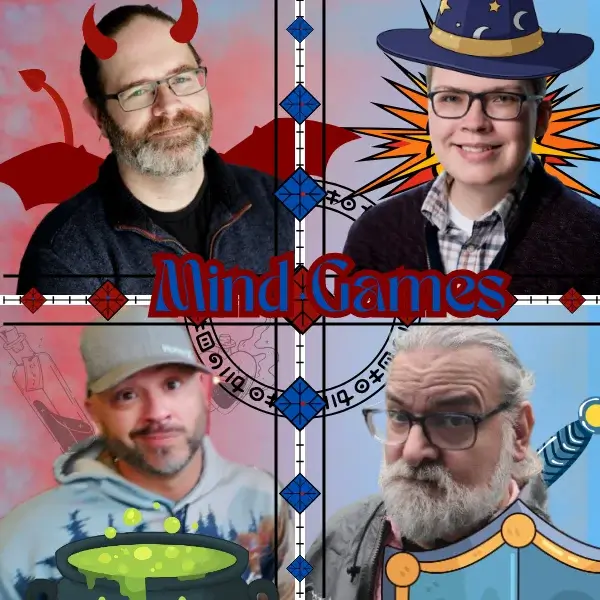
At this year’s Midwest Gaming Classic in Milwaukee, Wisconsin, a panel of mental health professionals is inviting attendees to take a closer look at what happens when gaming moves beyond entertainment and into clinical practice. The discussion brings together practitioners who are actively integrating video games and tabletop role-playing games into their work with clients.
For Ryan Hansen, Adler University professor, and one of the panelists, the path to this work did not begin in a lab or lecture hall. It began with a lifelong love of games.
“I’ve been gaming for decades,” Hansen explained. “That’s how I connected with colleagues who were also thinking about how this could be used therapeutically.”
That connection eventually led to a collaboration with clinicians experimenting with new forms of group therapy, particularly through tabletop role-playing games like “Dungeons & Dragons.” What started as a shared hobby evolved into a clinical approach, one that reframes gameplay as a space for reflection, identity exploration, and emotional growth.
The therapeutic game
In a traditional game of “Dungeons & Dragons,” players create characters and navigate a fictional world guided by a storyteller, or “Dungeon Master.” In a therapeutic setting, that same framework becomes a tool to investigate deeper.
During an early test session hosted by Andrew S. Bailey, founder and clinical director of Wisconsin Anxiety and Depression Clinic, clinicians were asked to embody distinct aspects of a single patient’s personality — logic, emotion, impulse — and respond to scenarios that mirrored real-life therapeutic challenges. Instead of simply discussing treatment plans, the participating clinicians lived them out through narrative and role-play.
“The main idea is based both in game development and psychotherapeutic best practices. I wanted to do ‘playtests’ for my game because it was such a new concept to me,” Bailey said. “I was trying to get feedback from peers to see what they thought about the game, the pace of play, and the therapeutic utility of using a game as a delivery vehicle for therapy.”
The result was a dynamic, immersive form of therapy that encourages perspective-taking, collaboration, and problem-solving.
“You’re not just talking about a problem,” Hansen said. “You are experiencing it from multiple angles. You are working through it with others, and that opens a different kind of understanding.”
Reimagined social interest
Adlerian theory is the concept of social interest: the idea that mental health is deeply tied to our sense of belonging and contribution to others. It is a concept that comes alive in gaming spaces.
Whether players are navigating a fantasy quest or coordinating strategies, they are constantly negotiating relationships, sharing perspectives, and working toward common goals.
“Some of the best sessions I’ve been part of are when people don’t agree, but they figure out how to move forward together,” Hansen said.
That process, learning to communicate across differences, collaborate under pressure, to see through someone else’s lens, is exactly what many therapeutic models aim to cultivate.
Meeting clients where they are
For clinicians, one of the most compelling aspects of gaming as therapy is its relevance, especially for clients of younger populations.
“In my experience, a large percentage of clients are already engaging with games,” Hansen said. “They’re talking about them, they’re connecting through them, they’re processing emotions through them.”
Rather than dismissing gaming as a distraction, therapists are beginning to ask a different question: What function is this serving?
For some, games provide stress relief. For others, they offer social connections, creative expression, or a sense of control in an otherwise overwhelming world.
“It’s a fantastic tool for therapeutic interventions,” Bailey said. “One major reason is that it can be hard to get people to commit to therapy, but when you have a fun activity that the therapy centers around it substantially increases participation.”
Even within gaming itself, different genres meet unique needs. A complex, strategy-heavy game might engage problem-solving and cognitive flexibility. A slower-paced simulation game can offer calm, routine, and emotional regulation.
Like any tool, gaming can be misused, but it can also be deeply supportive when approached with intention.
“It’s not about labeling games as good or bad,” Hansen explained. “It’s about understanding what they’re doing for someone and how we can build on that as clinicians.”
Play for all ages
While video games are part of the conversation, the panel emphasizes tabletop and role-playing formats, where face-to-face interaction adds another layer of connection. These spaces often foster something increasingly rare: unstructured, imaginative play.
For adults especially, that can feel unfamiliar, sometimes even uncomfortable, but it is also where growth happens.
“There’s this idea that playing is just for kids,” Hansen said. “But adults need it too.”
In therapeutic gaming, play becomes a vehicle for exploring identity, testing new behaviors, and engaging with emotions in a safe, contained environment.
It is also, importantly, fun.
The future of therapy
While research into gaming and mental health is still developing, interest in the field is growing. Clinicians are beginning to publish studies, develop curricula, and advocate for the inclusion of gaming in therapeutic training.
Hansen himself sees potential for future coursework that bridges gaming with counseling and art therapy — an idea that reflects a broader shift toward more creative, client-centered approaches in mental health care.
What was once considered niche is steadily moving into the mainstream. At events like the Midwest Gaming Classic, which spans over 350,000 square feet and brings together tens of thousands of enthusiasts, the audience is already there.
“I hope people will leave more informed about the uses and limitations of gaming for mental health,” Bailey said. “Gaming can be used to promote good mental health, even at home. It’s important that people know how to use this as a tool, both appropriately and responsibly.”
For the Adler University community, the panel represents more than an innovative idea. It reflects a deeper commitment to meeting people where they are, embracing new modalities, and expanding the boundaries of what therapy can look like.
It also offers a glimpse into the future of the field, one where healing might happen through stories and within shared worlds. Sometimes, the most meaningful breakthroughs do not happen in conversation alone. Sometimes, they happen mid-quest.