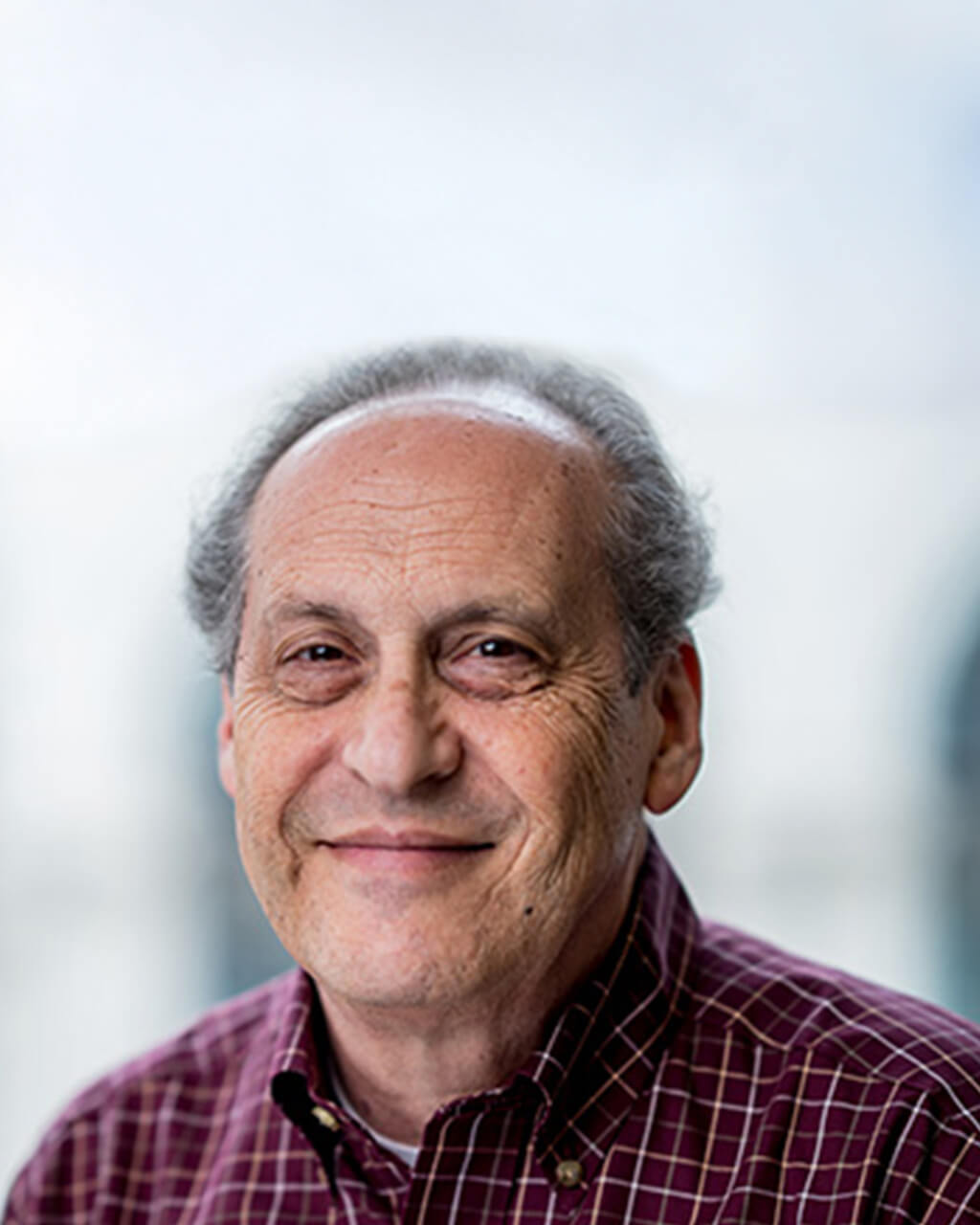
Neal S. Rubin, Ph.D, ABPP
Professor
Chicago
“All human beings are born free and equal in dignity and rights.” – Universal Declaration of Human Rights, Art. 1, 10 December 1948
OVERVIEW
Dr. Rubin is a board-certified, licensed clinical psychologist, educator, practicing psychologist, and human rights activist. He has taught and trained clinical psychologists since earning his doctorate from the University of Chicago’s Committee on Human Development. His publications have received national and international recognition, and he has been an invited speaker in multiple countries across five continents. Dr. Rubin is a former professor at the Illinois School of Professional Psychology and formerly served as chief psychologist at the Psychosomatic and Psychiatric Institute at Michael Reese Hospital and Medical Center in Chicago. He is past president of the Society for Global Psychology of the American Psychological Association, a representative on the APA NGO Team at the United Nations in New York City, and chair of the Committee on Scientific Freedom and Responsibility at the American Association for the Advancement of Science.
In his view, there is a certain reciprocity in the educational space. Teachers bring their expertise to the context, imparting knowledge, spirit, curiosity, and a love of learning. Students enter that same space eager to learn and grow through experiences designed to promote intellectual and personal development. In this dynamic process, students’ growth propels the learning environment forward as they generate new ideas, perspectives, and challenges that are uplifting not only for themselves and their peers, but also inspiring and edifying for their teachers. The secret is that we teach to learn, and what we learn, we teach. In the educational space, then, all are learners and all are teachers.
Students and faculty are drawn to Adler University’s commitment to social responsibility. His approach to the University’s emphasis on social justice begins with human rights. Regardless of the specific social justice issue under consideration, he views human rights as fundamental, underpinning the full range of social justice concerns. These rights are universal, indivisible, and inalienable. They provide the foundation for aspirations to create a world characterized by justice, equality, and human dignity for all people, everywhere. If everyone works toward the realization of respect for these rights, everyone navigates toward a more socially just world that uplifts humanity locally, nationally, and globally.
MEMBERSHIPS + ASSOCIATIONS
- American Psychological Association (APA).
- Division 52, Fellow.
- Council Representative, 2016-21.
- President, 2012-13.
- President-elect, 2011.
- Secretary, 2008-10.
- Division 52, Liaison to APA’s Office of Ethics, 2007-09.
- Co-chair, Chair, Past-chair Program Committee, chair, 2004-07.
- APA Oversight Committee, International Network for Lesbian, Bisexual, Gay and Transgender Issues in Psychology (IPsyNet), Representative, 2013-18.
- Fellows Committee, chair, 2024-present.
- APA Division 39 Society for Psychoanalysis and Psychoanalytic Psychotherapy.
- Division 39 (Psychoanalysis), Fellow.
- International Relations Committee, 2015-present.
- International Scholars mentor.
- American Board of Professional Psychology (ABPP), 2008.
- American Academy of Clinical Psychology (AACP), Fellow, 2008.
- American Association for the Advancement of Science (AAAS)
- Committee on Scientific Freedom and Responsibility (CSFR), chair, 2016-22.
- Chicago Center for Psychoanalysis (CCP).
- International Council of Psychologists (ICP), Executive Board director-at-large, 2011-13.
- Eastern Psychological Association (EPA), Fellow.
Publications + Presentations
Publications
The Cambridge handbook of psychology and human rights.
The human right to science and the authoritarian impulse: A GNPHR follow-up.
The importance of ethics for the multi-culturally informed mental health practitioner through a global human rights perspective.
Reduce inequalities within and among countries.
Psychology and human rights: Addressing equity, inequality and the SDGs in the COVID era.
Teaching the human rights foundations for social justice advocacy.
When systemic discrimination, violations of human rights and COVID-19 collide: Partnering with indigenous peoples so no one is left behind.
Promoting human rights and scientific responsibility in a deglobalizing pandemic era.
Commentary: Thoughts about the human rights challenges we confront in the fog of the war with the coronavirus.
Psychology, human rights, and the implementation of the UN’s 2030 agenda for sustainable development.
Introduction by the editors.
Voices of youth in psychology at the UN: 2016-2017 interns.
UN Matters: The march for science, the human right to science and the benefits of psychological science.
From surviving to thriving: The role of mental health in facilitating global health and attaining sustainable development.
UN Matters: A new Secretary General, a new UN vision as psychologists contribute to the 2030 global agenda.
UN Matters: Rejecting ageism: Psychological perspectives and international human rights law.
UN Matters: Issues facing international psychology: APA interns respond.
Sport promoting human development and well-being: Psychological components of sustainability.
UN Matters: International decade for people of African descent.
UN Matters: COP21: A turbulent 2015 ends with a historic agreement to save our planet- how might psychologists help?
Presentations
Apologies, Action and Repair: The role of human rights education.
Are our apologies enough to right the historical harms of our profession?
Honoring children’s rights on Human Rights Day.
(Moderator). An inclusive perspective on the training of future scientists.
Human Rights and Psychology: What are our obligations to protecting and securing the rights and dignity of everyone and to envisioning and creating the world we want.
Empowerment as a predictor of resilience among migrant women in the U.S.
Understanding Latinx DACA recipients’ psychological well-being.
What are human rights violations?
Acknowledging and transcending our dark history: Psychologists supporting authoritarian regimes.
Building back better everywhere: Health inequities, sustainable development and the human right to science.
Human rights essentials for psychologists: Foundations for social justice advocacy.
(Discussant). Contributing to the United Nations: Sustainable Development Goals and the role of psychology.
From international psychology to a global mindset.
From aspiration to implementation: Educating psychologists to promote human rights.
Realizing the promise of our field: Integrating psychology and human rights.
Doing no harm: Psychologists promoting human rights and human dignity in the 21st century.
(Moderator). Psychological contributions to gender equality: Sharing perspectives from the United Nations.
In an era devaluing knowledge: The human right to science.
Forming peacebuilders: Youth identity development related to peace and citizenship across contexts.
Psychologists and human rights across the globe.
Ethical dilemmas for the clinical psychologist: Solitary confinement, torture, racial injustice and human rights in the U.S. prison system.
From analytic anonymity to human rights advocacy: A psychologist’s perspective from the United Nations.
A psychologist’s international human rights perspective.
Human rights, health disparities and Psychology Day at the UN.
When greed goes unchecked: Big oil and human rights in Indian country.
Human well-being and the environment: Human rights and the U.N.’s 2030 global agenda.
Solitary confinement and torture: A human rights perspective.
Psychologists working for human rights.
A case of a haunting: Psychoanalytic perspectives.
Human migration and climate change: An emerging global challenge to promoting resilience.
Seeking harmony in diverse places unknown: The plight of immigrants and refugees in the 21st century.
Climate Change, SDG’s and Human Rights: Educating Global Citizens to Preserve our Environment.
Psychoanalysis around the world series: Psychoanalysis during Argentina’s dirty war: Torture, collusion, resistance and their resonance today.
LEADERSHIP + ENGAGEMENT
- American Association for the Advancement of Science (AAAS), chair, Committee on Scientific Freedom and Responsibility (CSFR), 2016-22.
- American Psychological Association United Nations NGO Team, Special Projects Associate and Representative Department of Public Information (DPI), 2003-18.
- Psychology Day at the United Nations.
- Program Committee, 2008-19; program chair, 2013; chair, 2015; moderator, 2017.
- American Board of Professional Psychology (ABPP), examiner.
- International Psychology Bulletin (IPB) African Journal of Political Science and International Relations (AJPSIR), editorial reviewer.
- Global Network of Psychologists for Human Rights, Advisory Council, 2020.
- St. Augustine College, Chicago, Illinois, Advisory Board, 2019-20.