
Shaping Our Future: Introducing the Adler University Senate
Adler University has always been driven by a commitment to social interest and to the people who bring our mission to life. As we’ve grown into a graduate university with a broad focus on health equity, wellness, public policy, and preparing the next generation of world leaders, while building on our leadership in professional psychology, our global community has grown more diverse and dynamic. That growth calls for a governance model that matches it. I’m proud to share that Adler is launching its first-ever University Senate, a central shared governance body that gives our faculty, staff, and students a clear and lasting voice in shaping the University’s future.
The Senate is the result of more than two years of thoughtful work by members of our community, including a Shared Governance Workgroup of faculty, staff, students, and administrators from across the University. The Senate brings together elected and appointed representatives from our Chicago and Vancouver Faculty Councils, our Staff Council, the Adler Student Government in Chicago, and the Adler Student Association in Vancouver, with the provost serving as chair. Its agenda will come directly from our constituents. The Senate will deliberate on issues such as strategic priorities, academic policy, budget alignment, new programs, and community well-being and inclusion, and will make formal recommendations and decisions to the provost and me, which we will respond to within a defined timeframe. This creates a transparent, documented process so that good ideas move forward and every voice has a path to be heard.
We are launching the Senate as a two-year pilot, beginning this academic year, so that our community can build it, test it, and improve it together. Feedback throughout the pilot will guide our progress, and a formal vote on the Senate’s bylaws will follow a full evaluation. The University Senate will convene in December for the first time, and I look forward to the collaboration, fresh perspectives, and shared sense of purpose it will bring to Adler. Thank you to everyone who helped make this milestone possible. Together, we are building a stronger, more connected University.
Lisa Coleman
President, Adler University
Why Adler is strengthening shared governance
Shared governance is an important part of how a university makes decisions. It creates meaningful opportunities for members of the University community to contribute their expertise, understand how decisions are made, and share responsibility for advancing the institution’s mission.
Adler has grown into a prominent graduate university with programs delivered across Chicago, Vancouver, and online. Its academic focus has also expanded beyond its leadership in professional psychology to include health equity, wellness, public policy, organizational leadership, and other areas of social impact.
As the University has grown, its governance needs have become more complex. Adler needs a modern, University-wide structure that clearly defines how faculty, staff, students, administrators, and trustees contribute to institutional decision-making.
The University also recognizes that previous governance structures have not always met the community’s expectations. Some constituents have felt unheard, and important initiatives have sometimes stalled or moved through unclear processes. The University Senate pilot is intended to address these concerns through a more representative, transparent, and accountable model.
What shared
governance Means
Shared governance is a collaborative approach to institutional decision-making that recognizes the distinct responsibilities and expertise of different groups across the University.
It does not mean that every decision is made by everyone. Instead, shared governance establishes clear pathways for:
- Seeking input and expertise
- Developing recommendations
- Making and approving decisions
- Communicating outcomes
- Documenting how and why decisions were made
- Holding participants accountable for follow-through
Depending on the issue, different individuals or groups may be responsible for consultation, recommendation, decision, approval, implementation, or communication.
How the Model
Was Developed
Faculty, staff, students, and administrators have contributed to the development of a more representative University-wide governance structure over the past three years.
Most recently, the Shared Governance Workgroup brought together community members from across Adler to examine how decisions are made and how different constituencies are represented.
Adler also engaged Keeling & Associates, LLC, a higher education consulting firm with extensive shared governance experience. Keeling & Associates has supported the University by:
- Facilitating and documenting workgroup discussions
- Conducting research into governance practices
- Developing comprehensive University Senate bylaws
- Aligning faculty, staff, and student council bylaws
- Recommending the Senate’s structure and representation
- Updating Adler’s institutional decision-making matrix
- Developing communications and training resources
Shared Governance and Adlerian Values
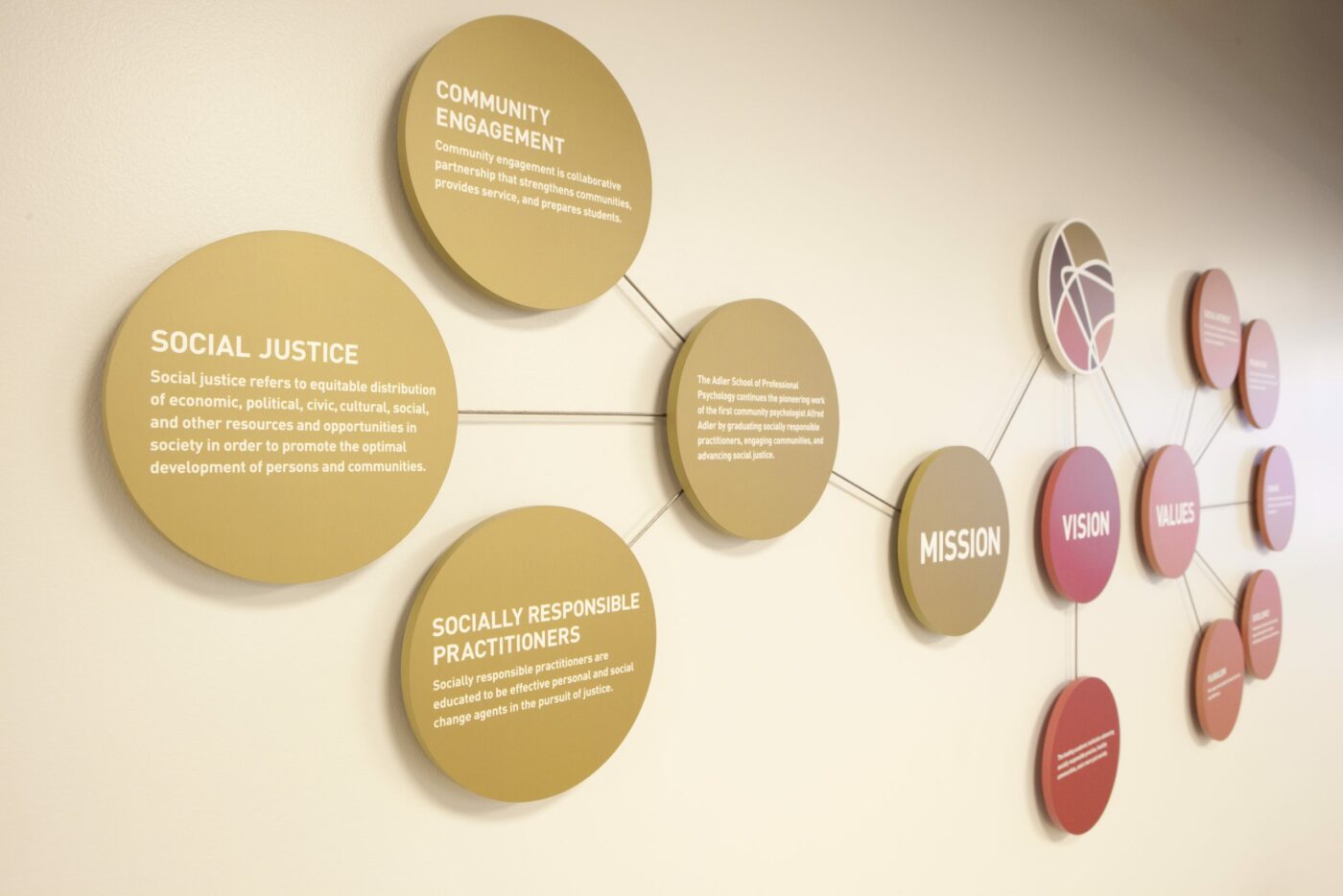
The University Senate reflects Adlerian values of community building, social interest, and collective responsibility.
By creating formal opportunities for different constituencies to contribute, the model supports an inclusive governance environment in which community members can help shape Adler’s institutional direction.
Building and Evaluating
The University Senate
July and Early August 2026
Stakeholder Engagement
The Shared Governance Workgroup and University partners refine the Senate framework, develop Senate bylaws, and revise constituent council bylaws.

August 2026
Structure and Implementation Planning
The University develops the implementation plan, updates the decision-making matrix, and prepares communications and supporting resources.

September 2026
Education and Readiness
Adler develops Senate orientation and training, shares questions and answers, gathers community feedback, and establishes its approach to evaluating the pilot.

October or November 2026
University Senate Launch
The first University Senate meeting takes place, beginning the formal two year pilot.

two year pilot
Initial Implementation
Expected milestones include:
- Holding the first Senate meeting
- Receiving in-principle endorsement of the bylaws
- Adopting the decision-making matrix
- Completing initial member orientation
- Confirming the Senate’s operating procedures
Testing the Process
Expected milestones include:
- Completing trial exercises
- Beginning work on active policy or academic matters
- Conducting an initial assessment check-in
- Aligning constituent council bylaws with the Senate structure
Evaluating and Refining the Model
Expected milestones include:
- Completing a comprehensive year-one evaluation
- Documenting lessons learned
- Refining Senate procedures
- Preparing for the incoming Senate cohort
Final Evaluation and Formal Consideration
Adler will evaluate the Senate’s structure, bylaws, decision-making processes, community participation, and institutional impact before considering formal ratification.
Current status: Education and Readiness
Next milestone: First University Senate Meeting
What Is the
University Senate?
The University Senate will serve as Adler’s central shared governance body. It will bring representatives from the University’s primary constituent groups together to consider matters of broad institutional importance.
The Senate will advise the president and provost on matters that may include:
- University strategy and long-term planning
- Academic policies
- Budget priorities and alignment
- New academic programs and program closures
- Curriculum and graduation requirements
- Student experience and student success
- Campus culture and climate
- Facilities planning
- Cross-campus opportunities and operational challenges
The Senate will not replace the responsibilities of the Board of Trustees, president, provost, or other University leaders. These individuals and bodies retain their respective operational, fiduciary, and final decision-making authority.
How Decisions move
Through the Senate
An Issue Is Raised
Faculty Councils, Staff Council, student governing bodies, Senate members, and administrative leaders may bring forward matters for consideration.
The Issue Is Reviewed
The Senate determines whether the matter falls within its scope and identifies the groups and subject-matter experts who should be consulted.
The Senate Deliberates
Senate members review available information, consider community perspectives, discuss possible actions, and vote on a recommendation.
A Recommendation Is Submitted
The Senate provides its formal recommendation to the president or provost.
University Leadership Responds
The president or provost responds within a defined period. The response explains whether the recommendation is accepted, modified, or declined.
The Outcome Is Communicated
Senate representatives report outcomes to their constituent bodies. Minutes and plain-language recaps are published.
Bylaws and
Decision-Making Matrix
The University Senate bylaws establish its membership, responsibilities, meeting procedures, committees, voting requirements, and amendment process.
During the pilot, the bylaws will operate under an in-principle endorsement. They may be adjusted as the University evaluates what is working and where improvements are needed.
The decision-making matrix identifies which individuals and groups participate in different types of University decisions.
Consult
Provides input, expertise, or perspective before a decision is made.
Recommend
Gathers information, considers options, and proposes a course of action.
Decide
Holds final responsibility and accountability for selecting a course of action.
Approve
Provides formal authorization before a decision can be implemented.
Informed
Receives notice of a decision and its outcome.
An 11-Member University Wide Body
The University Senate includes representatives from faculty, staff, students, and University administration and will met meet virtually at least five times during each academic year.
Four Faculty Members
- Chair of the Chicago Faculty Council
- One elected Chicago Faculty Council representative
- Chair of the Vancouver Faculty Council
- One elected Vancouver Faculty Council representative
Faculty and staff representatives serve staggered three-year terms.
Two Staff Members
- Chair of the Staff Council
- One elected Staff Council representative
Faculty and staff representatives serve staggered three-year terms.
Two Student Members
- President or designated representative of Adler Student Government in Chicago
- President or designated representative of the Adler Student Association in Vancouver
Student representatives serve one-year terms. Constituent body officers serve by virtue of their elected or appointed positions.
Three Administrative Members
- Provost, serving as Senate chair
- Chief of staff, serving as Senate secretary
- President
The administrative members serve in non-voting roles.
Meet the University Senate
University Senate member profiles will be added as appointments and elections are completed.

Name
Name
Name
Name
Name
Name
Name
Name
Name
Name
Name
Name
Name
Name
Name
Name
Name
Name
Name
Name
Name
Name
University Senate Meetings
The University Senate will meet virtually at least five times each academic year and will not be open to outside participants. This approach supports candid discussion, psychological safety, and respectful deliberation among members.
Transparency will be maintained through:
- Published meeting minutes
- Plain-language meeting recaps
- Written responses to Senate recommendations
- Regular town halls
- Reports to constituent bodies
- Updates at significant pilot milestones
Meeting minutes are expected to be published within 10 business days.
Upcoming Meeting
Date: To be announced
Time: To be announced
Location: Virtual meeting
Agenda: Available before the meeting
Past Meeting Minutes
A Two-Year Pilot
The University Senate will operate during the 2026-2027 and
2027-2028 academic years.
The Senate bylaws will initially receive an in-principle endorsement rather than immediate formal ratification. This allows Adler to test the governance model, collect feedback, identify improvements, and adjust procedures before considering permanent adoption.
What the New Model Is Intended to Achieve:
Rebuild Trust and Transparency
Create a predictable and documented process for advancing important initiatives.
Improve Cross-Campus Collaboration
Provide a shared forum for issues affecting multiple campuses, departments, or constituencies.
Strengthen Community Participation
Ensure faculty, staff, and students have meaningful roles, including dedicated Vancouver representation.
Support Sound Academic Decisions
Protect faculty expertise in academic matters while consulting the operational teams responsible for implementation.
Clarify Responsibility and Authority
Identify who must be consulted, who recommends, who decides, who approves, and who must be informed.
Create More Efficient Pathways
Improve coordination through clearly defined responsibilities without adding unnecessary meetings or layers of work.
Measuring Progress
Evaluation may consider:
- Meeting participation
- Community awareness and understanding
- Issues brought forward
- Policy and recommendation progress
- Implementation outcomes
- Response and routing times
- Student success outcomes
- Cross-campus participation
- Community perceptions of trust and transparency
Results from the 90-day, six-month, and one-year check-ins will be shared with the Adler community.
What Success Will Look Like
Successful shared governance at Adler will create a predictable, transparent, and collaborative approach to decision-making.
Faculty, staff, and students will have meaningful and documented ways to inform institutional strategy, academic policy, budget priorities, student experience, and campus climate.
The community will be able to understand what was considered, what was decided, why the decision was made, and what happens next.
Frequently Asked Questions
Why is Adler creating a University Senate?
Adler has grown in reach, academic scope, and institutional complexity. The University needs a representative governance structure that connects its Chicago, Vancouver, and online communities and establishes clearer decision-making pathways.
The Senate also responds to concerns that previous structures did not consistently provide every constituency with a meaningful voice or a predictable process for advancing important issues.
What will the Senate provide that Adler did not have before?
The Senate creates one representative, cross-constituency body for considering matters of University-wide importance. It establishes clear responsibilities, formal recommendation pathways, written leadership responses, and documented communication of outcomes.
What authority will the Senate have?
The Senate will primarily serve in an advisory and recommendation-making capacity.
The Board of Trustees, president, and provost retain their respective final operational and fiduciary authority.
Who can bring an issue forward?
Issues may be submitted through Faculty Councils, Staff Council, student governing bodies, Senate members, or University administration.
How can I participate if I am not a Senator?
Participate through the constituent body that represents you. You can attend discussions, contact your representative, or use the submission form on this page.
The Senate may also invite community members with relevant expertise to contribute to committees or specific discussions.
How will Vancouver be represented?
Dedicated Vancouver representation is built into the Senate’s composition. The Vancouver Faculty Council and Adler Student Association will have designated seats.
What role will staff have?
Staff Council will have two voting representatives. Eligibility requirements are designed to support meaningful staff participation while recognizing institutional power dynamics.
Will the Senate create more meetings?
The objective is to clarify and streamline existing pathways, not create unnecessary work. The pilot will evaluate whether the Senate improves coordination and reduces duplication.
Are Senate meetings open to everyone?
No. Meetings will remain closed to support candid discussion and psychological safety.
Transparency will be provided through minutes, recaps, town halls, formal leadership responses, and reporting through constituent bodies.
What happens if University leadership disagrees with a recommendation?
The president or provost must provide a written response within a defined period indicating whether the recommendation is accepted, modified, or declined. The response must also provide the rationale or a timeline for further consideration.
Why are the bylaws not being ratified immediately?
The in-principle endorsement allows Adler to test the bylaws in practice. The Senate can recommend improvements during the pilot before the bylaws are considered for formal ratification.
How will the pilot be evaluated?
Adler will conduct regular assessments using participation data, policy progress, implementation outcomes, community feedback, awareness measures, and perceptions of trust and transparency.
GOVERNANCE GLOSSARY
Absence
The failure of a member or representative to attend a scheduled meeting, which may affect whether the body reaches quorum.
Abstention
A formal decision not to vote on a motion. Under the voting definition provided in Adler’s talking points, an abstention counts as a “no” vote when calculating total votes.
Adjourn
To formally close a meeting, either until a specified future date or indefinitely, ending official proceedings for that session.
Amendment
A proposed change to the wording of a pending motion before the final vote, such as adding, removing, or replacing words.
Approve
To provide formal authorization before a decision can be implemented.
Business Days
Official University operational workdays, Monday through Friday, excluding University holidays and institutional closures.
Bylaws
The formal rules governing an organization’s membership, responsibilities, committees, meetings, voting procedures, and amendment processes.
Call to Order
The official announcement by the presiding officer that a meeting has begun and business may proceed.
Constituent Body
An officially recognized governance organization representing faculty, staff, or students that elects or appoints Senate representatives.
Consult
To seek or provide expertise and perspective before a decision. Consultation informs the decision but does not require consensus.
Decide
To hold final authority and accountability for selecting a course of action.
Designee
An individual designated in writing by a constituent body chair to temporarily attend meetings and vote on behalf of an absent voting member.
Endorse
To formally express support for an action, policy, or proposal without necessarily making it legally binding.
Ex Officio
Membership held by virtue of a person’s position. Voting rights are determined by the bylaws.
In Camera
A private session held to discuss sensitive matters, such as personnel or legal issues.
Informed
To receive notice of a decision and its outcome without directly participating in the decision.
Motion
A formal proposal presented to a governing body for discussion and voting.
Pilot Period
The 2026-2027 and 2027-2028 academic years, during which Adler will test and evaluate the Senate.
Proxy
Authorization allowing another individual to represent and vote on behalf of an absent member, only when explicitly permitted by the bylaws.
Quorum
The minimum number of voting members required to conduct official business. For the University Senate, quorum is two-thirds of voting members.
Ratify
To provide formal and binding approval to an action, policy, agreement, or governing document.
Recommend
To gather input, analyze options, and propose a course of action without holding final authority.
Recusal
Withdrawing from discussion or voting because of a real or perceived conflict of interest.
Robert’s Rules of Order
A standardized guide to parliamentary procedure that helps governing bodies conduct fair, organized meetings, discuss proposals, and make decisions.
Shared Governance
The structures and processes through which faculty, staff, students, administrators, and trustees participate in institutional planning, policy development, and decision-making according to their respective responsibilities.
Subject-Matter Expert
A community member who is not a Senator but is invited to provide specialized knowledge or experience.
Unanimous Consent
A method of approving an item without a formal roll-call vote when no voting member present objects.

Stay informed
Shared governance depends on participation, communication, and accountability. Visit this page regularly for meeting materials, Senate recommendations, leadership responses, updated governance documents, and pilot evaluation results.
Last updated: September 2026
Page owner: President’s Office and University Communications