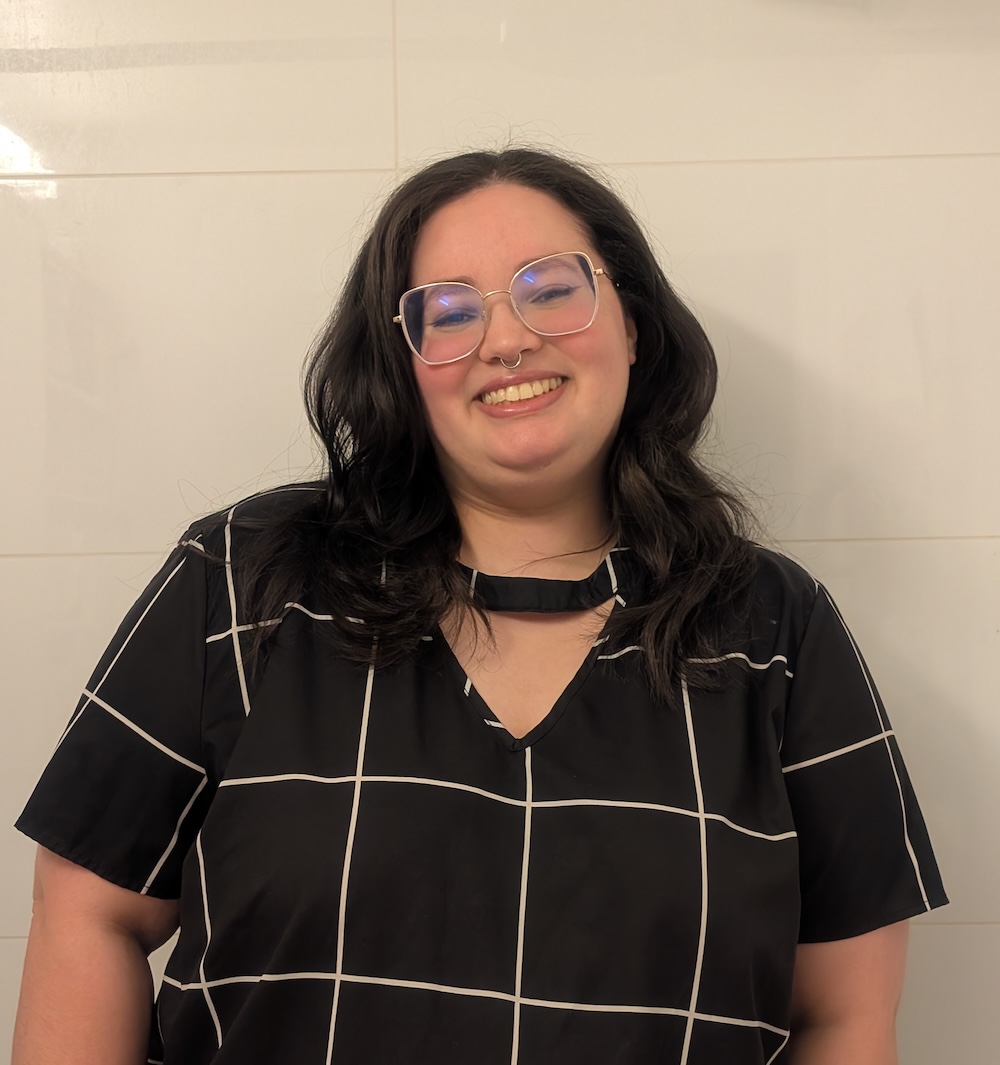
By Alexandra Melo
Student, Master of Counselling Psychology
Some people start their day with meditation, others with coffee. I start mine with both — and an existential debate about whether I should have worn comfier clothes, because it’s Thursday, which means 12 hours of classes at Adler.
Twelve hours probably sound like a punishment to most, but to me, it’s a kind of marathon of meaning. I chose to stack most of my classes into a 12-hour Thursday to compress my schedule, leaving room for a social life, homework, and practicum hours without everything colliding like an emotional traffic jam.
It’s a day that starts with theory and ends with empathy, punctuated by laughter, pizza, and more self-reflection than I thought a person could fit into one day.
When I first chose Adler and its Master of Counselling Psychology program, it wasn’t just for education, though the practicum experience and the focus on community engagement were huge factors. I chose it because it felt right. Even before I enrolled, the tone of every email I received was warm and human. I’d just come out of an undergraduate degree that felt cold and transactional, where classrooms were like conveyor belts moving students along. I didn’t want that again. I wanted a place that understood people, not just theory. Adler was precisely that.
Learn more on how the Master of Arts and Master of Counselling Psychology program prepares students to enter the field as responsible, effective, and self-reflexive clinicians.
Orientation day sealed it. Everyone showed up nervous but hopeful, and by the end, we were laughing, trading numbers, and making a group chat that hasn’t gone silent since. The second-year students were there too, eager to answer questions and offer advice, and for the first time in years, I didn’t feel like I was standing outside looking in. The energy was warm, genuine, and human. It’s place where “How are you?” actually means “How are you doing?”
By 9 a.m. on Thursdays, I’m in my Adlerian Psychology course, where we learn that being a counsellor isn’t just a job; it’s a way of existing. My professor, James Lowe, talks about presence — how to sit with someone else’s pain without drowning in it — and I find myself thinking that maybe this is what being human is about. The class is small, everyone’s faces are familiar, and the room feels like a warm living room rather than an academic space. Someone cracks a joke about how we’re all “baby counsellors” still learning to walk, and the laughter that follows feels like family.
Lunchtime arrives like a reward. Sometimes I stay on campus and talk with my friends, many of whom have become a chosen family, about how we’re all secretly terrified of our next counselling session, and other times I wander downtown for a slice of pizza and an overpriced pastry that I tell myself I deserve (and I do). If I’m eating on campus, there’s always a buzz from someone either sharing good news or someone else venting about a tough week. It’s messy and human, and real, and I love that.
Theories class, taught by Christina Cook, Ph.D., comes next, which we jokingly call “speed dating for counsellors.” Each week, we meet a new theory, learn its quirks, and decide whether we could see ourselves “marrying” it. I’ve already had a serious flirtation with cognitive behavioural therapy, a type of talking therapy that helps people identify and change unhelpful patterns of thinking and behaviour. During our presentation, my group, which included my endlessly supportive classmates who make even PowerPoints feel like art projects, got everyone to make a core beliefs tree, digging into how our past shapes our self-perception and behaviours.
Watching everyone reflect, laugh, and sometimes get quiet during that exercise reminded me why I’m here: because when people feel safe, they open up.
By late afternoon, I’m practicing counselling with another student partner. The silence, the staring, the “what do I say now?” panic used to terrify me, but somewhere along the way, I stopped performing and started being. I learned that curiosity, authenticity, and a little humour can go a long way. The sessions aren’t perfect (whose are?), but they’re real.
Then comes my last class: Counselling Skills, also taught by Dr. Cook — and honestly, I couldn’t ask for a better way to end the day. Dr. Cook has a gift for turning a classroom into a sanctuary. She ensures the space is safe, alive with curiosity and vulnerability. We’ve moved on to “fishbowls,” where two students volunteer to roleplay a client and counsellor in front of everyone. It sounds like a nightmare, but somehow, it’s become one of the best parts of the week.
Dr. Cook reminds us that courage matters more than perfection. You learn to quiet down your inner critic, to trust that your empathy knows what it’s doing. The feedback isn’t harsh — it’s nurturing. Everyone wants you to grow, not to prove yourself.
By 9 p.m., I’m exhausted, a little hungry again, and still strangely energized. I head home thinking about how far I’ve come from that girl who moved from Portugal after Covid — the one who sat through lectures that felt like fast food: quick, impersonal, and meant to be forgotten. Adler isn’t like that. It’s slow-cooked education — the kind that simmers with compassion and connection. My classmates are a huge part of that. They’re the kind of people who check in on you when you miss class, who listen without judgment, who celebrate your small victories as if they were their own. We all come from different backgrounds and want to take different paths — family therapy, neurodiversity, crisis work, end-of-life counselling — but what unites us is how deeply we care. I fall asleep easily after Thursdays, sometimes still replaying Dr. Cook’s words in my head, or smiling about a classmate’s joke that got us all through the afternoon slump. I dream about the future — working in crisis intervention, maybe on the front lines, where I can make a difference in real time.
That’s the thing about Adler. It doesn’t just teach you how to counsel others; it teaches you how to be human — again, and better. And if you listen closely between the theories and the practicum hours, you realize that the real learning happens not in the lectures, but in the moments of belonging — in the way people look up and actually ask, “How are you doing?” — and mean it.
Alexandra (Alex) Melo is a first-year student in the Master of Counselling Psychology program at Adler University in Vancouver, where she’s learning to turn empathy, curiosity, and caffeine into a viable career path. Originally from Portugal, she bravely swapped pastel de nata for maple taffies when she moved to Kamloops to earn her bachelor’s degree in psychology at Thompson Rivers University. After triumphantly crossing the graduation stage (and hoping she would not trip over her gown), Alex moved to Vancouver with her partner to chase her counselling dreams and build a life in a city that has more rain than she was led to believe. Her academic interests lie in narrative and solution-focused therapies, particularly within crisis intervention, where she hopes to help people find hope, humour, and new meaning when life’s plot twists hit hardest. Outside of school, Alex identifies as a proud cozy-maximalist: fluent in binge-watching anything on Netflix, blanket layering, and the perfect ratio of coffee to cat cuddles.