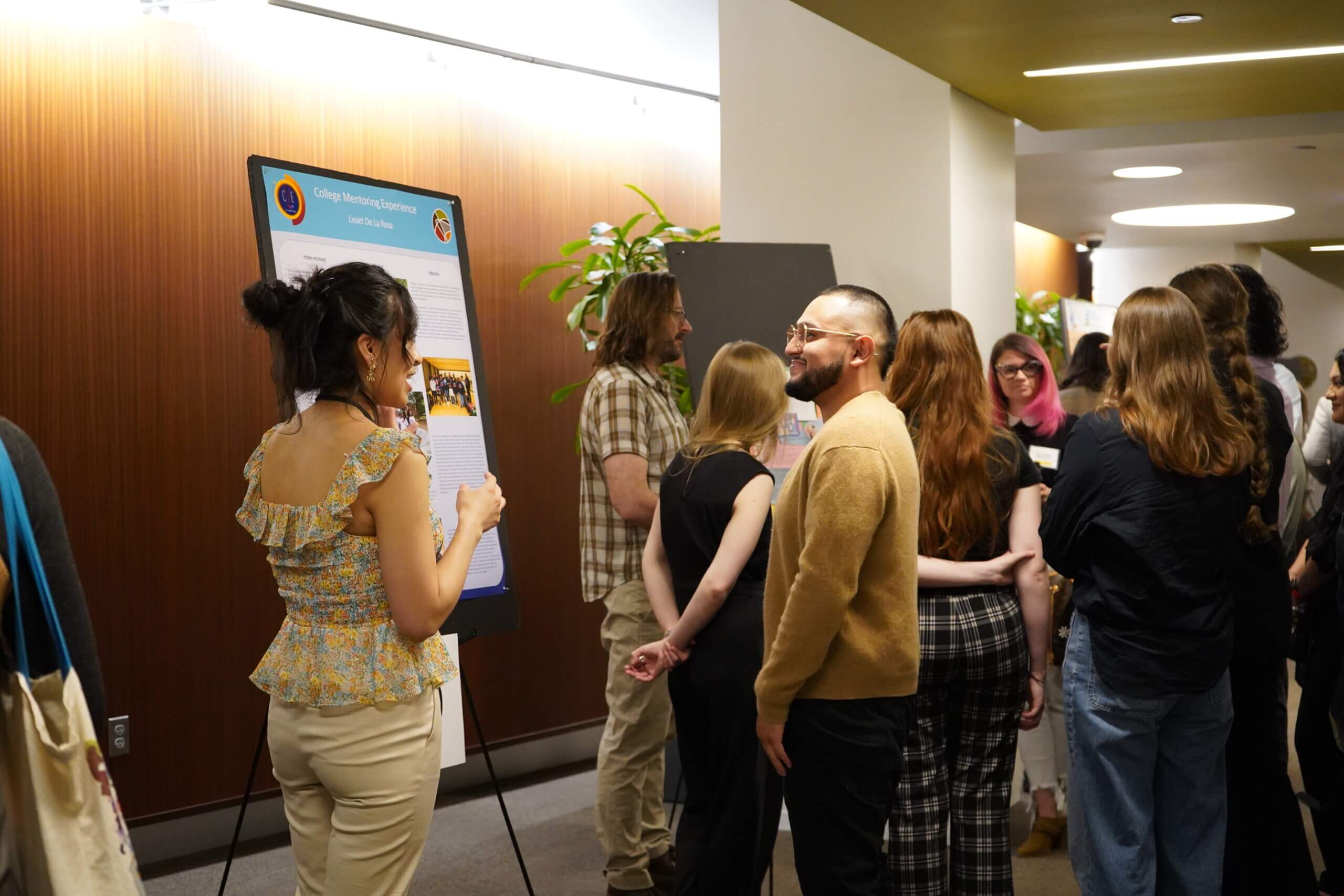
Adler University will host its annual Adler Social Interest Practicum (ASIP) Symposium on Tuesday, May 12, during which students will present their experiences in the program.
Around 80 Chicago-based Adler students will share their practicum experiences through poster presentations, panel discussions, workshops, and art exhibits for an audience of community partners, faculty, staff, and peers.
The event is one of the University’s largest annual gatherings, celebrating the impact students make through community engagement.
The Adler Social Interest Practicum Symposium, formerly known as the Social Justice Practicum Symposium, is a yearly event hosted by the Center for Civic Learning and Community Action to highlight the non-clinical practicum work students have completed throughout the academic year.
From community outreach initiatives to program development and advocacy efforts, the symposium offers a space for students to showcase the real-world skills they have built and the communities they have supported.
“It’s a really great event and we look forward to it every year,” said Francine Reed, manager of community partnerships at the Center for Civic Learning and Community Action. “Students absolutely love it, and we have a lot of faculty who attend to see what their students’ positive impact in the various communities and their dedication to social interest and health equity outside of the classroom.”
Following opening remarks, attendees can explore multiple sessions throughout the day. These include four scheduled presentation blocks, allowing participants to move between poster displays, panel discussions, workshops, and art exhibits. Each session gives students the opportunity not only to present their work but also to engage with feedback from faculty, staff, and community partners serving as moderators.
The symposium will also feature a keynote address from Anita Jenke, executive director of the Career Transition Center of Chicago. A longtime ASIP partner of more than a decade, Jenke has mentored numerous Adler interns and played a key role in shaping students’ professional development.
A highlight of the day is the awards presentation, where around 15 students will be recognized for their outstanding contributions as practicum interns. Nominated by their site supervisors and evaluated based on performance, engagement, and impact, these students represent excellence in community-based work.
The practicum experience itself begins at the start of the academic year, when students attend a partner fair to explore opportunities with local organizations. After ranking their preferred placements, students are matched with community partners across the Chicagoland area, with some online students matched with community partners across the United States.
Over the course of the year, students complete roughly 200 hours of non-clinical work, developing skills in areas such as grant writing, fundraising, marketing, community outreach, curriculum development, and needs assessment.
These placements are intentionally designed to introduce students to community engagement early in their graduate education, before they begin clinical training. Through this work, students gain a deeper understanding of systemic and civic issues while building practical, transferable skills that will support their future careers.
For many students, the symposium marks the culmination of months of learning, collaboration, and impact. It is both a celebration of their work and a reflection of Adler University’s commitment to social interest and heath equity, demonstrating how students apply their education to create meaningful change in their communities.